The Lakedale Resort Blog Update Project
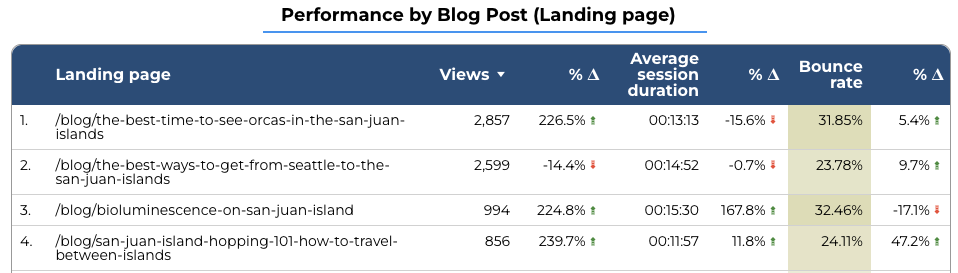
In partnership with Lakedale’s SEO team, Popa & Associates updated nine blogs over a span of three months. This outdated blog refresh allowed for better resort marketing, increased search rankings, and gave visitors a better idea of what to expect from their trip to + on the island.
Keep reading to learn about our content audit—it very well might help your business, too!
Refresh your resort blog: How we updated 9 outdated posts in 3 months
At Popa & Associates, many of our favorite projects start with existing content. That means looking at already-written website copy, old blog posts, or even brain-dumped bulleted lists to write a newsletter. To that end, each year, and in partnership with Lakedale’s SEO team, we look at our full list of blogs to see which articles are getting fewer eyeballs than they have in the past or have fallen in keyword rankings.
In 2025, we worked on a large set of blogs—nine in total—that needed refreshed content or new structure to perform better in search (to always be as helpful as possible to you, the reader). We completed this project over three months, delivering three blogs a month and updating them in WordPress, Lakedale’s website platform.
It went like this:
The SEO team audited the site content and identified blogs that needed a refresh
They ran that list by the resort’s GM and the Popa & Associates team
They got sign-off and created content briefs (outlines with instructions) for the P&A team
The P&A team meticulously went through each brief to update the written content
The P&A team got sign-off on the new content from the broader marketing team
The P&A team updated each blog
Many rankings increased, and quickly (keep reading)
Outdated blog content costs you rankings
So often, we’re looking forward to what we need to do next. This is typical. But looking back can be just as important, especially when you have a piece of content that is working really, really hard for you. See: The Viral Workhorse Holiday Blog. Staring at a blinking cursor brings its own set of excitement and challenges, so we’re often thrilled at the opportunity to start with something that just needs a little kick in the pants to be its best. That’s where updating stale blog content comes in. Besides, no one wants to lose search rankings when a simple content refresh can help you continue to win.
Quickly, here’s how to think about it:
Search engines favor fresh, relevant information
Outdated posts actively harm domain authority if they contain stale data
Visitor bounce rates increase when content feels out of touch or incomplete
Often, when you’re not updating your existing content, it’s a missed opportunity for link updates and keyword optimization
Net: Skim through those old blogs and make sure they still make sense + are working hard for you and your business. At the end of the day, blog content is meant to be helpful, and it’s important it stays that way, even years after it was first published.
Lakedale’s content situation
Lakedale began blogging about five years ago, and since then has posted 1-2 blogs each month. A few years into blogging, and with encouragement from the SEO team, we added blog refreshes to the content scope. That means the SEO team looks at alllll of the content, evaluates peaks and valleys, and suggests a few blogs a year to refresh so they either remain high ranking or come back up in ranking if they’ve dipped. As we said earlier, in 2025, we did a big audit and refreshed nine blogs over three months.
The blogs we updated were a mix of our all-time-highest-ranking blog + several others that could stand to include more keyword phrases or the removal of old information to help their search ranking.
our 3-month process
Phase 1: Audit and keyword research
In this phase, the SEO team mentioned the project, Lakedale approved it, and they went deep into auditing recommended blog updates. They delivered their findings first in an extremely robust Google sheet, followed by individual content briefs.
Phase 2: Rewrite & Restructure
Once the P&A team received the briefs, we started the detail work of digging into each blog and making important phrasology edits, tweaking headings, updating (or often creating) meta + SEO descriptions, excerpts, and more. We also checked and refreshed hyperlinks. We took our time with this one, but we could have easily done all the blogs in one month.
We found, though, that fresh eyes are key, so taking our time—and gut-checking each other (Jami did the main edits and Whitney reviewed)—worked really well for this project.
Phase 3: Optimization and publishing
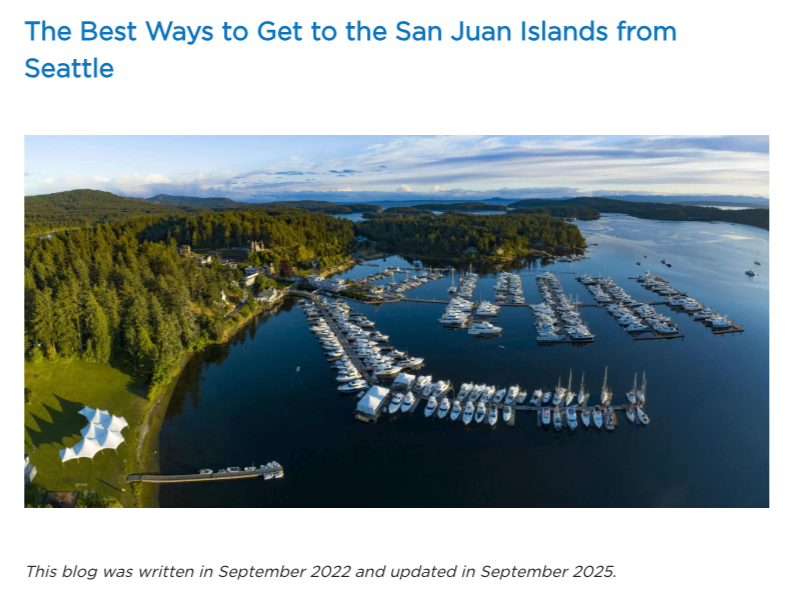
After each new blog was approved (this was a process that the client signed off on with full trust to us—eight years into our partnership, they didn’t care to read blogs they’ve already read), the P&A team updated each blog within WordPress, added excerpts, and hit Save. Sometimes, we changed the date so the content appeared “new” to Google, but that strategy is debatable with many an SEO team. Mostly, we wrote at the top of each blog when it was originally written and when it was updated. Doing this helps the reader most (and the search engines, too—see examples below).
It’s amazing how tiny things like changing phrases like “the San Juans” to “the San Juan Islands” can completely change a blog’s ranking. We went into that level of detail.
The main things we changed across blogs
One of the best tips we’ve learned over the past few years is how effective an FAQ section in blog posts can be for you and your business. Not only are these sections able to include a juicy list of keyword phrases without sounding clunky (e.g. you don’t have to worry about weaving “Best whale watching tours near me” into an otherwise relatively conversational sentence), but they also give your readers a quick hit summary of what your blog contains.
In a world of clickbait and skimmable headlines, FAQ sections can do double duty for you. They’re fast and they’re helpful.
There is a lot more we could say here, but we kind of already covered it above, and it’s a little heady for you (we word nerds love it, but we’ll spare you waxing poetic again about keyword phrases). Just know this is mostly detail work, and adding FAQ sections is the biggest new part of each overhaul we completed.
Key takeaways for your blog refresh
Freshness signals matter — Search engines reward regularly updated content. And you don’t have to change the date on the content for search engines to know it’s fresh. History matters here, too, so it’s very much a dance.
Outdated info is a liability — We all know that incorrect details hurt trust and rankings. Still, we’re not often looking at our older content and evaluating whether it needs to be updated.
Structure is strategy — Better organization = better rankings and UX. For people with creative brains, AI (we like Claude) can really come in handy for this. You can feed your Chat older blogs and prompt it to help you organize for optimal, intuitive flow.
Keyword integration evolves — What worked 2 years ago might need recalibration. This one is a little more how the sausage is made, but digging into keyword rankings and where you’ve fallen off can help you refresh content to re-rank for the same keywords or add in a few new, relevant phrases.
Internal linking amplifies reach — Refreshed posts are perfect for link updates. Check those links!

Ready to publish your blog?
If you are thinking the key to more web traffic is consistent, quality content (*cough* blogs cough), you’re in the right place. Hit us up to chat about what you want + what we can do. We’d love to help you rise to the top—literally.